
There is a specific moment late on a summer day that photographers call the “golden hour.” The harsh, high noon sun dips toward the horizon, softening its light into warm ambers and deep golds. Shadows lengthen, the air cools slightly, and the frenetic energy of the day settles into a long, peaceful exhale. Everything looks better in this light. It is the time of day when the hard work is mostly done, and one can finally appreciate the landscape.
Life has a golden hour, too.
For many of us hitting our 50s, 60s, and beyond, we are entering that phase. The frantic career building, the intense years of raising young families, the constant striving for the next promotion or the bigger house—that high noon heat is beginning to wane. We are entering our own “second act.”
But this transition can feel disorienting. When the noise of the daily grind quiets down, what fills the silence? How do we maintain purpose, vitality, and connection when the structures that defined our previous decades begin to shift away?
The answer might just be waiting right outside your back door, beneath a layer of topsoil.
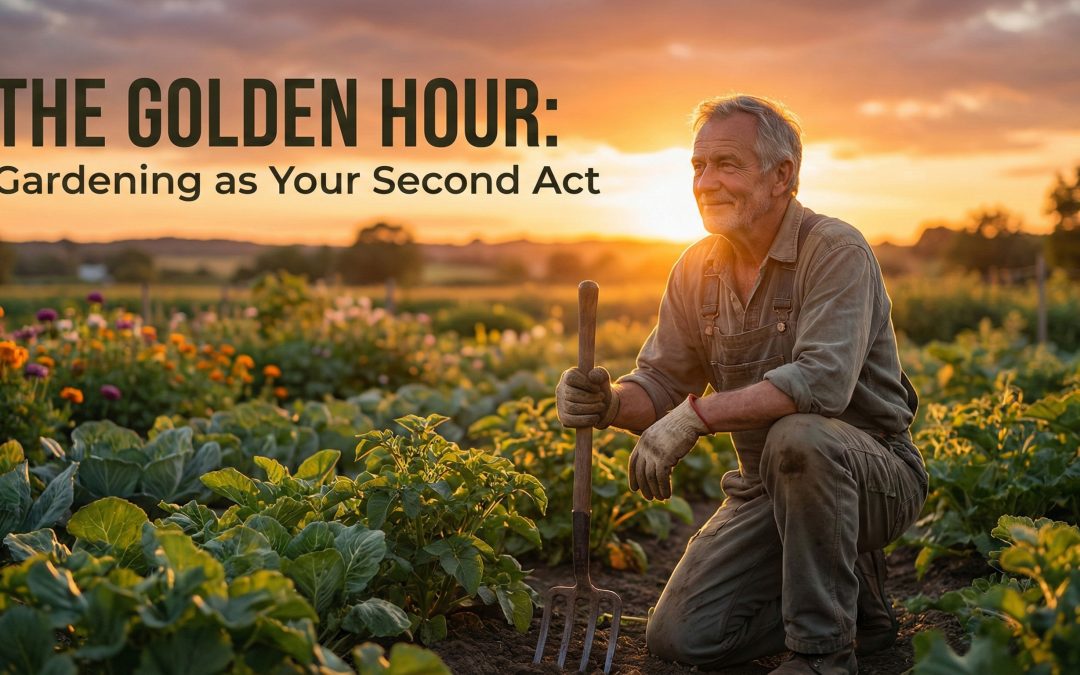
Gardening is often dismissed as a merely decorative pastime or a chore for the retired. But look closely at someone deeply engaged in the soil—like the man captured in the image above, kneeling in the late afternoon light, hands gloved, a genuine, contented smile on his face. You aren’t looking at someone just passing time. You are looking at someone engaged in the most holistic, rewarding, and life-affirming “second act” hobby there is.
Here is why trading the briefcase for a trowel, or the boardroom for a raised bed, might be the best decision for your golden years.
Motion with Meaning: The Sustainable Workout
As we age, our relationship with exercise changes. The desire (and perhaps the ability) to run marathons or crush high-impact gym sessions often fades, replaced by a need for functional fitness. We want longevity. We want mobility. We want the strength to lift a grandchild, the flexibility to tie our shoes easily, and the stamina to enjoy a full day of activity without paying for it for the next three days.
Gardening is nature’s gym. It doesn’t require expensive memberships or spandex. It requires showing up.
Look at the posture of the gardener in the photo. He is kneeling, engaging his core and legs for stability. He’s using his hands, maintaining dexterity and grip strength that so often diminishes with age. The simple acts of digging a hole for a tomato plant, hauling a bag of compost, reaching to prune a high branch, or squatting to pull a stubborn weed provide a full-body workout that is remarkably effective because it is varied.
Unlike the repetitive motion of a treadmill, gardening moves the body in dynamic ways. It is low-impact but high-yield. You become so engrossed in the task at hand—getting that row of lettuce straight before the sun goes down—that you don’t realize you’ve just done two hours of squats, lunges, and weight-bearing exercise. You end the day with the good kind of tired—the satisfying ache of muscles used for a tangible purpose, not just burning calories.
Cultivating a New Purpose
One of the biggest psychological hurdles of entering our “second act”—particularly retirement—is the sudden loss of professional identity. For decades, we were defined by what we did, by the problems we solved, and the teams we led. When that structure vanishes, it can leave a void.
We need to feel needed. We need structured responsibility. A garden provides a magnificent new boss.
A garden is demanding. It doesn’t care what your previous job title was. It only cares if you show up to water it during a drought or protect it from pests. This responsibility is incredibly grounding. When you plant a seed, you enter into a contract with the future. You are committing to nurture that living thing.
The psychological rewards of this are immense. In the corporate world, successes can be abstract—a quarterly report, a completed merger. In the garden, success is visceral. It’s the crunch of a cucumber you grew from seed; it’s the explosion of color in a zinnia patch you cultivated. This is a tangible return on investment that feeds the soul (and the stomach) in a way a spreadsheet never could. The garden gives you a reason to wake up early, check the weather, and formulate a plan for the day. It restores the rhythm that retirement can sometimes disrupt.
Soil Therapy: Grounding in a High-Speed World
Our modern lives, even in our later years, are often defined by screens, notifications, and a low-level hum of digital anxiety. We spend so much time living in the cloud that we forget to touch the ground.
Gardening is the ultimate antidote to digital overwhelm. It forces presence. You cannot scroll through newsfeeds while you are actively weeding a carrot patch; you have to pay attention to what is a vegetable and what is an invader.
There is something profoundly therapeutic about the sensory experience of the garden. It’s the smell of rich earth after a rain, the tactile sensation of soil crumbling between gloved fingers, the sound of birds—like those flying in the distance in the photo—replacing the sound of traffic or television.
Scientists have even suggested that Mycobacterium vaccae, a harmless bacterium found in soil, may stimulate serotonin production, acting as a mild, natural antidepressant when inhaled or absorbed through the skin. Whether it’s the microbes or simply the meditative act of being outdoors, the result is the same: a lowering of cortisol, a calming of the mind, and a deep sense of peace. The man in the photo, pausing to look up with that gentle smile, embodies this tranquility. He is right where he is supposed to be.
The Legacy of Connection
Finally, the “second act” is often a time when we shift from accumulating things to seeking connection. We realize that the size of our house matters less than who fills it.
Gardening, while often done in solitude, is deeply communal. It connects you to the seasons, forcing you to notice the subtle shifts in light and temperature that you used to ignore while rushing to the office. It connects you to the ecosystem, making you an active participant in the life cycles of pollinators, birds, and plants.
And inevitably, a garden connects you to people. There is the age-old tradition of the “zucchini surplus,” where the abundance of the harvest demands to be shared with neighbors. There is the joy of cooking a meal for your family using ingredients that were still in the ground an hour prior. There is the legacy of teaching a grandchild how to plant a sunflower seed and watching their awe as it grows taller than they are.
Embracing Your Golden Hour
If you find yourself standing at the threshold of this new phase of life, wondering what comes next, look outside. You don’t need a massive plot of land; a few raised beds or even a collection of containers on a patio are enough to begin.
It’s okay to get your clothes dirty. It’s okay to have soil under your fingernails. In fact, it’s recommended. Like the golden hour of sunset, this period of your life is meant to be savored, not rushed through. It is a time to plant something, nurture it, and watch it grow. In doing so, you might just find that you are growing right along with it.