
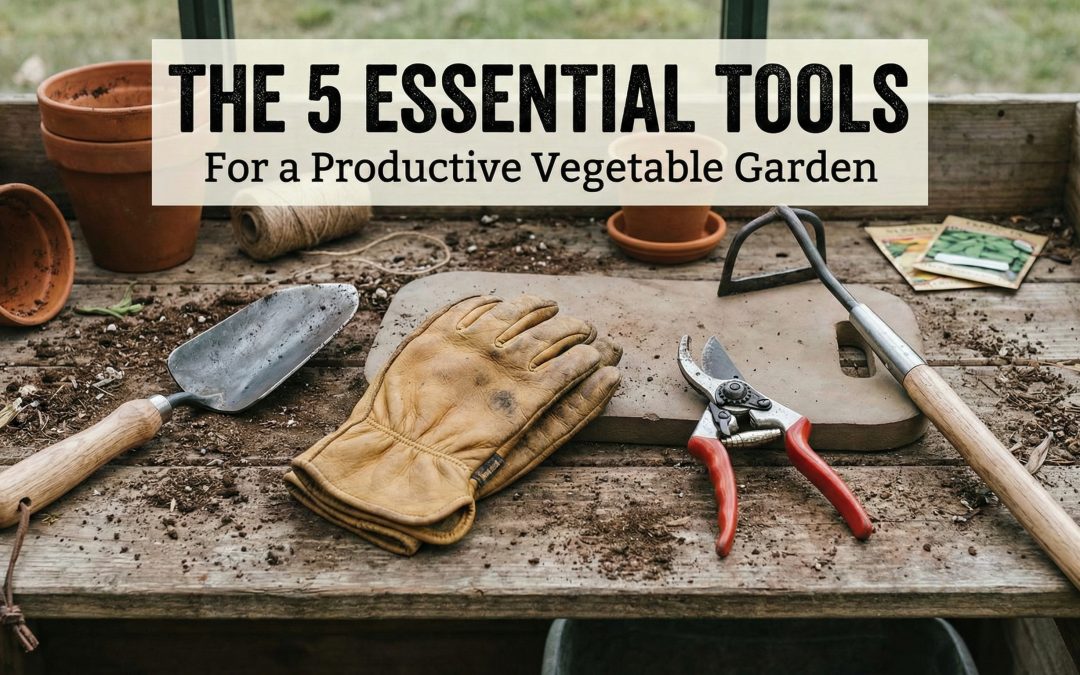
Walk into any big-box home improvement store in the spring, and you will be assaulted by a wall of shiny, neon-handled garden gadgets. There are weed pullers with ejection mechanisms, electronic soil testers that look like sci-fi props, and plastic tools that claim to do everything but cook the vegetables for you.
It is easy to fall into the trap of thinking you need a shed full of equipment to grow a tomato.
But stop and look at the veteran gardeners—the ones who actually spend their evenings with dirt on their jeans and a harvest basket full of produce. Look at the man in the photo above. He isn’t surrounded by plastic gadgets. He has a pair of well-worn gloves, a sturdy trowel, and clothes he doesn’t mind ruining.
Gardening is a primitive act. It is about the friction between human effort and the soil. While the right tools can make the job easier and save your body from strain, the wrong tools—the cheap, flimsy, or overly complicated ones—are just future landfill.
If you are serious about starting a vegetable garden, or if you are looking to upgrade your kit for the long haul, ignore the gimmicks. You only really need five high-quality tools to run a productive garden.
1. The “Buy It For Life” Hand Trowel
If you look closely at the image, the gardener is holding a classic hand trowel. This is the extension of your hand. You will use it for digging transplant holes, mixing fertilizer, digging out stubborn taproots, and smoothing soil.
What to look for: Most trowels sold in starter kits are made of stamped metal or cheap aluminum. They will bend the moment you hit a rock, or the handle will snap off where the metal meets the plastic. Instead, look for a forged steel trowel.
- The Tang: Ensure the metal “tang” (the neck) extends deep into the handle.
- The Handle: Ash or hardwood handles absorb shock better than plastic and get more comfortable with age.
- The Blade: A slightly sharpened edge helps cut through roots and compacted clay.
Pro Tip: Consider a “Hori Hori” knife. It’s a Japanese gardening tool that combines a trowel with a serrated knife. It’s a favorite among master gardeners for its versatility.
2. “Second Skin” Gloves
Gardening is tactile, and many of us love the feel of soil. But soil dries out your skin, rocks cause blisters, and brambles carry tetanus. You need protection, but you also need dexterity. If your gloves are too bulky, you can’t feel the difference between a weed seedling and a carrot sprout.
What to look for: Avoid the thick, loose-fitting cotton gloves sold in bulk packs. They get wet, stay wet, and offer zero grip.
- Nitrile-dipped gloves: These are lightweight, breathable on the back, but waterproof on the palm and fingers. They fit like a second skin, allowing you to handle tiny seeds while keeping your fingernails clean.
- Leather work gloves: For heavy chores like pruning rose bushes or hauling compost bags (like the ones the man in the photo appears to be wearing), you need goat or cowhide leather. They mold to your hands over time and provide serious protection.
3. The Knee Savers
The gardener in our image is kneeling directly on the earth. While this looks picturesque, doing it for hours is a recipe for orthopedic issues later in life. If you want to be gardening into your 70s and 80s, you must protect your joints.
What to look for: You have two main options here, and both are valid:
- Wearable Knee Pads: These strap over your pants. The benefit is that they move with you. You can walk from the shed to the garden and kneel down instantly without setting anything up. Look for gel-inserts or heavy-duty foam often sold for construction work.
- A Kneeling Bench/Pad: A dense foam pad is great, but a reversible kneeling bench is even better. One way up, it’s a padded kneeler with handles to help you push yourself back up. Flip it over, and it’s a stool to sit on while you prune or harvest.
4. Bypass Pruners (Secateurs)
You cannot tear plant stems; you must cut them. Tearing crushes the plant’s vascular system and invites disease. A sharp pair of pruners is the surgeon’s scalpel of the garden. You will use these to harvest peppers, prune tomato suckers, cut back dead flowers, and trim woody herbs.
What to look for: There are two types of pruners: Anvil and Bypass.
- Anvil pruners have a blade that crushes down onto a flat surface (like a knife on a cutting board). These are for dead wood only.
- Bypass pruners work like scissors, with two blades passing each other. You want Bypass pruners. They make a clean, healthy cut on green, living stems.
- Maintenance: Look for a brand that sells replacement parts (springs and blades). If you can replace the blade, you can keep the tool for a lifetime.
5. The Stirrup Hoe (The Back Saver)
While the trowel handles the close-up work, you need something for the open spaces between rows. Weeding is roughly 50% of gardening. If you try to pull every weed by hand, you will burn out by July.
What to look for: Do not buy a traditional “chopping” hoe (the kind you see in cartoons). They move too much soil and bring buried weed seeds to the surface. Get a Stirrup Hoe (also called a Hula Hoe or Oscillating Hoe).
- How it works: It has a loop of steel that rocks back and forth. You push and pull it just under the surface of the soil. It slices the weeds off at the root without turning the soil over.
- The Benefit: You stand upright. You can clear a 10-foot row of weeds in 30 seconds with a stirrup hoe, compared to 10 minutes on your hands and knees.
Conclusion: Respect Your Tools
The man in the image isn’t holding a shiny, pristine tool. It’s used. It has a patina. That is the sign of a real gardener.
When you buy cheap tools, you treat them cheaply. You leave them in the rain, and when they rust or break, you toss them. When you invest in quality steel and wood, you develop a relationship with the tool. You clean the dirt off the metal after a day’s work. You rub linseed oil into the wooden handle once a year. You sharpen the blade.
Gardening is an investment of time and patience. Your tools should honor that commitment. Start with these five essentials, buy the best version you can afford, and they will likely be with you for every harvest to come.